You're probably dealing with one of two situations right now. Either an existing filtration machine is letting fines through, plugging downstream equipment, and driving up maintenance, or you're trying to specify a new skid and need to make sure the filter train protects RO membranes, EDI modules, pumps, valves, and product quality from day one.
In both cases, the mistake is the same. Teams buy filtration by category name alone, not by separation duty, fouling behavior, cleanability, and lifecycle cost. A bag filter, cartridge housing, chamber press, screen filter, and membrane system can all be called a filtration machine, but they solve very different industrial water problems. The right choice reduces unplanned downtime and protects expensive assets. The wrong one becomes a recurring operating issue.
Table of Contents
- Understanding the Core Filtration Spectrum
- Common Filtration Technologies and Equipment Types
- Sizing and Selecting for Critical Industrial Applications
- Key Performance Metrics for Filtration Systems
- Strategies for Maintenance and Fouling Mitigation
- Procurement and Logistics for Your Filtration Project
- Conclusion Your Partner in Industrial Filtration
Understanding the Core Filtration Spectrum
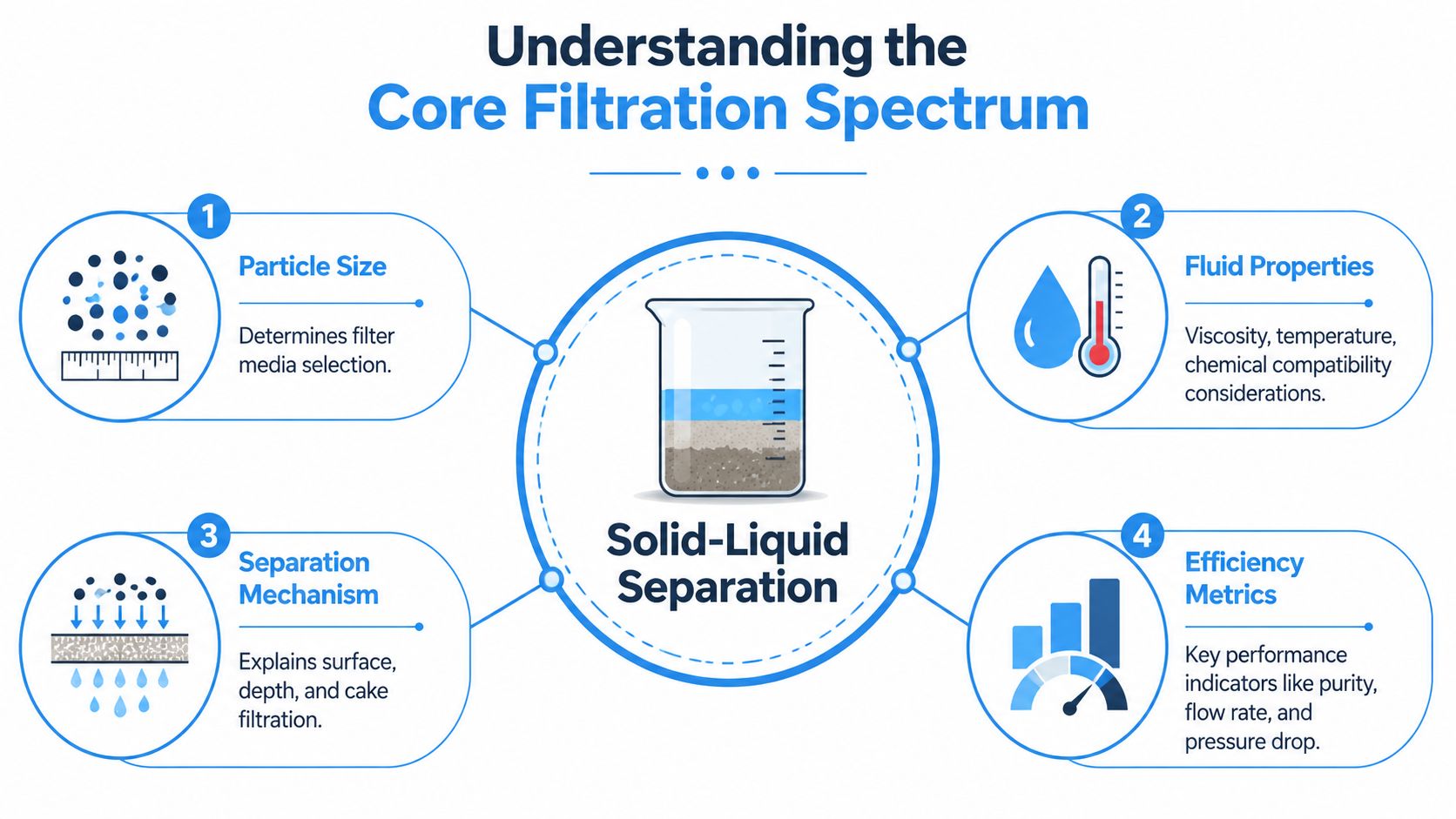
A filtration machine exists to do one job well. Separate solids from liquid in a controlled, repeatable way. Everything else, media choice, vessel style, pore size, pressure drop, cleanability, and consumable life, follows from that basic requirement.
If the separation duty is poorly defined, the equipment choice usually goes wrong. Plants then compensate with higher changeout frequency, more operator attention, and premature fouling downstream.
Solid-liquid separation comes first
Start with the feed stream, not the product brochure. You need to know what solids are present, how variable the load is, whether those solids deform, whether the liquid chemistry attacks the media, and how much flow the process must sustain without starving downstream equipment.
Three practical questions usually decide the first cut of technology:
- What has to be removed. Coarse grit, suspended solids, colloids, bacteria, viruses, or ionic species all point to different hardware.
- What happens if solids pass through. A plugged spray nozzle is annoying. A fouled RO train or EDI stack is expensive.
- How will the system be maintained. Disposable cartridges, backwashable screens, and cake-discharge presses each shift labor and operating cost in different ways.
For plants evaluating cartridge or bag housings for pretreatment, this industrial guide to Fil-Trek bag and cartridge strainer housings is useful because it shows how physical housing style affects serviceability and footprint, not just nominal filtration duty.
Practical rule: If the solids load is variable and your downstream equipment is sensitive, specify the filtration machine around worst-case feed conditions, not average lab results.
The membrane scale that guides selection
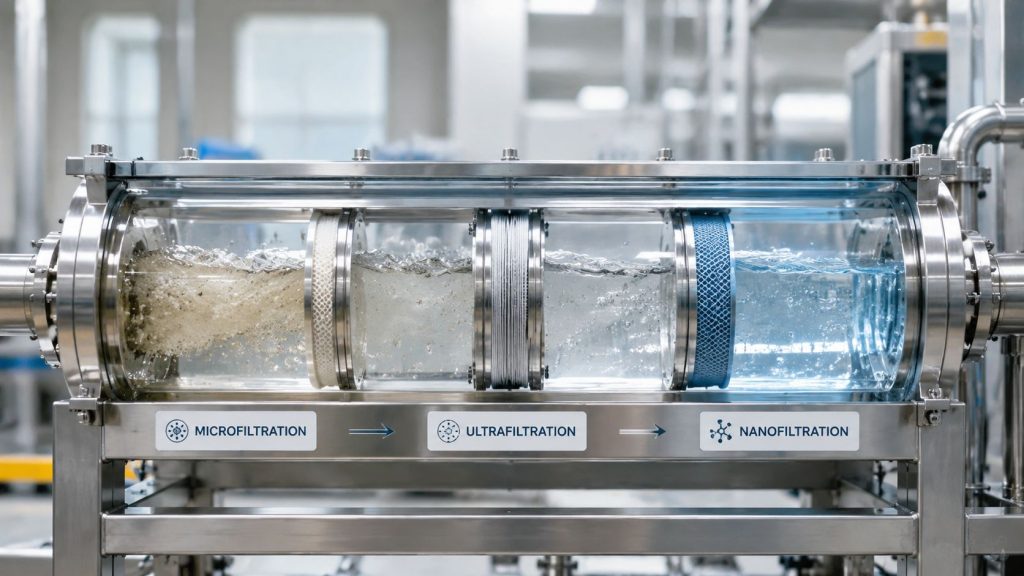
For membrane-based separation, pore size is the framework engineers use to match technology to contaminants. According to this water filtration reference on membrane pore sizes, microfiltration membranes have a pore size of 0.1 µm, ultrafiltration operates at 0.01 µm, and nanofiltration allows only particles smaller than 0.001 µm to pass. In practical terms, that means microfiltration handles sediment, algae, and bacteria; ultrafiltration reaches small colloids and viruses; and nanofiltration removes larger divalent ions of salts.
That progression matters because buyers often jump straight to “finer is better.” It isn't. Finer separation usually means tighter fouling control, stricter pretreatment discipline, and more sensitivity to pressure conditions. A plant that only needs suspended solids removal can overspend badly by choosing membrane duty when a simpler depth or surface filter would protect the process just as well.
Use this spectrum as a buying filter:
- Microfiltration fits when solids and microbial load are the concern.
- Ultrafiltration makes sense when colloids and finer biological contaminants threaten the process.
- Nanofiltration belongs where ionic selectivity matters, not just visible clarity.
That's the core decision logic behind any industrial filtration machine selection.
Common Filtration Technologies and Equipment Types
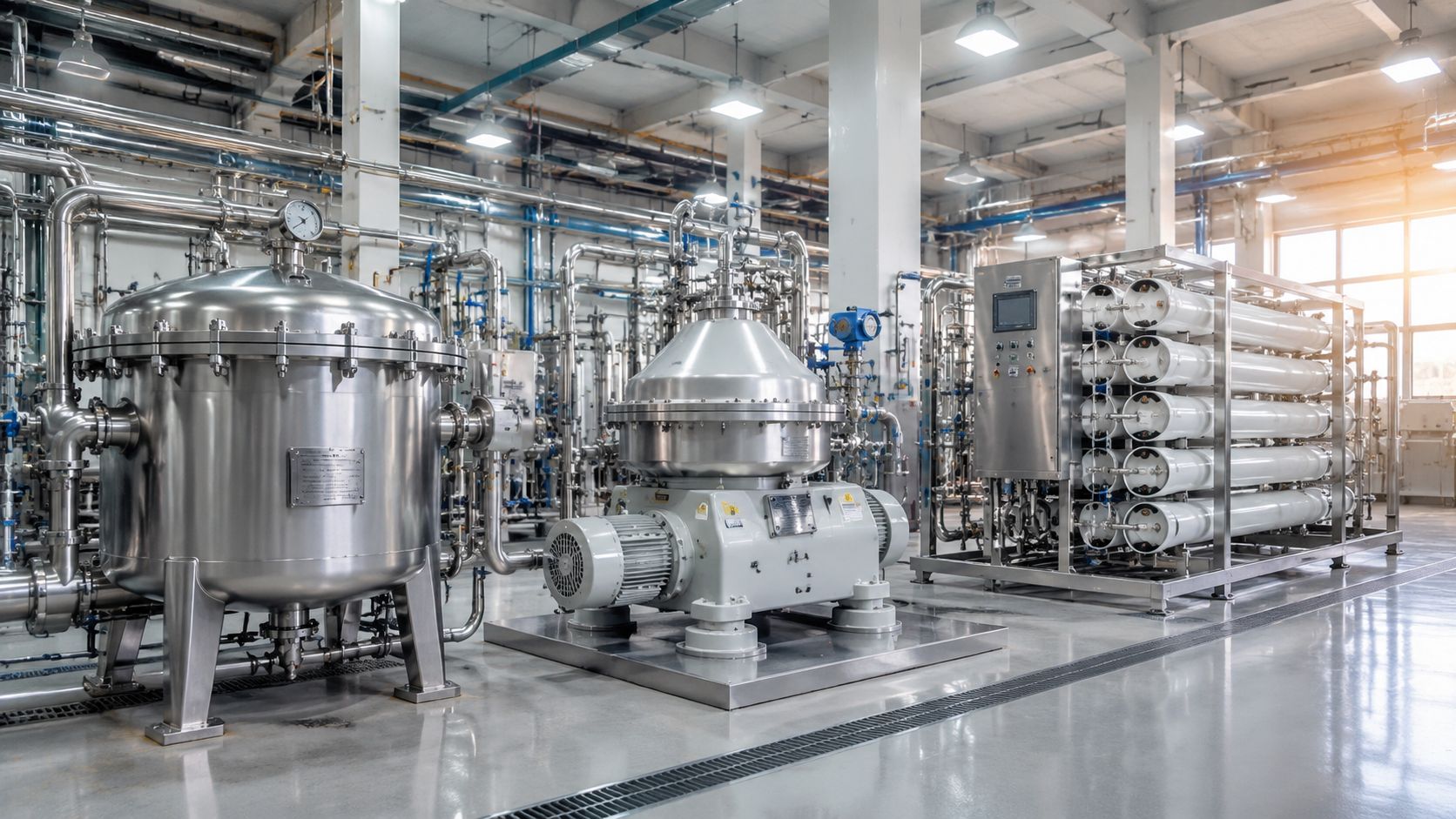
Once the separation target is clear, the next question is hardware. Consequently, many projects drift because equipment families overlap. A bag housing, cartridge vessel, screen filter, lenticular pod, chamber press, or membrane skid can all look plausible until you compare how each one captures solids and how operators have to live with it.
Depth filtration versus surface filtration
The most useful distinction is depth filtration versus surface filtration.
Depth filters capture solids through the thickness of the media. Cartridge filters and lenticular modules fall into this group. They usually handle variable particle size better and can provide finer polishing, but they also load internally, which means differential pressure can rise in ways that aren't obvious from a quick visual inspection.
Surface filters capture solids mainly on one plane. Filter bags, screens, and strainers are the common examples. They're straightforward, often lower in consumable cost for coarse service, and easier to understand in operation. But they're not the right answer for every polishing duty, especially when downstream membranes or ion-sensitive equipment need tighter protection.
A buyer looking at membrane pretreatment should also understand where RO hardware fits relative to these upstream devices. This industrial product guide to Veolia reverse osmosis membranes helps frame that distinction. Membranes are not a substitute for good solids control ahead of the RO train.
Where each equipment type fits
Bag and cartridge housings work well in general process water service, pretreatment polishing, and utility water applications where maintenance access is reasonable and the solids burden isn't so high that changeouts become constant. A key trade-off is operating discipline. If operators let differential pressure climb too far, the filter stops being cheap.
Automatic self-cleaning screen filters suit streams with larger suspended solids where continuous operation matters more than fine polishing. They reduce manual intervention, but they're not magic. If the solids are soft, sticky, or highly compressible, the cleaning cycle may not restore performance as expected.
Chamber filter presses belong in heavy solids service. According to this industrial filtration systems reference, for high-solids applications up to 50% solids content, chamber filter presses are a standard solution, using pressure-driven cake filtration to dewater wastewater sludge or mining tailings. That's a very different duty from pretreatment polishing. A filter press is selected when dry cake handling and liquid-solid separation economics dominate the decision.
Lenticular depth filtration pods fit high-purity separation. The same reference notes that industrial lenticular depth filtration pods use a stacked-disc design for duties such as fermented product clarification. In practice, engineers choose them when product protection and fine clarification matter more than easy bulk solids handling.
Industrial Filtration Technology Comparison
| Technology | Mechanism | Primary Use Case | Relative Cost |
|---|---|---|---|
| Bag filter housing | Surface filtration | Coarse to moderate suspended solids removal in process or utility water | Low to moderate |
| Cartridge filter housing | Depth filtration | Fine pretreatment and downstream asset protection | Moderate |
| Self-cleaning screen filter | Surface filtration with automated cleaning | Continuous solids removal where manual cleaning is undesirable | Moderate to high |
| Chamber filter press | Pressure-driven cake filtration | High-solids dewatering such as sludge or tailings | High |
| Lenticular depth filter | Depth filtration in stacked-disc format | High-purity clarification and polishing | High |
| Microfiltration or ultrafiltration skid | Membrane separation | Fine particle and microbial control in critical water systems | High |
Equipment choice should follow failure mode. If your real risk is membrane fouling, don't buy a low-cost coarse filter and hope operator attention will close the gap.
Sizing and Selecting for Critical Industrial Applications
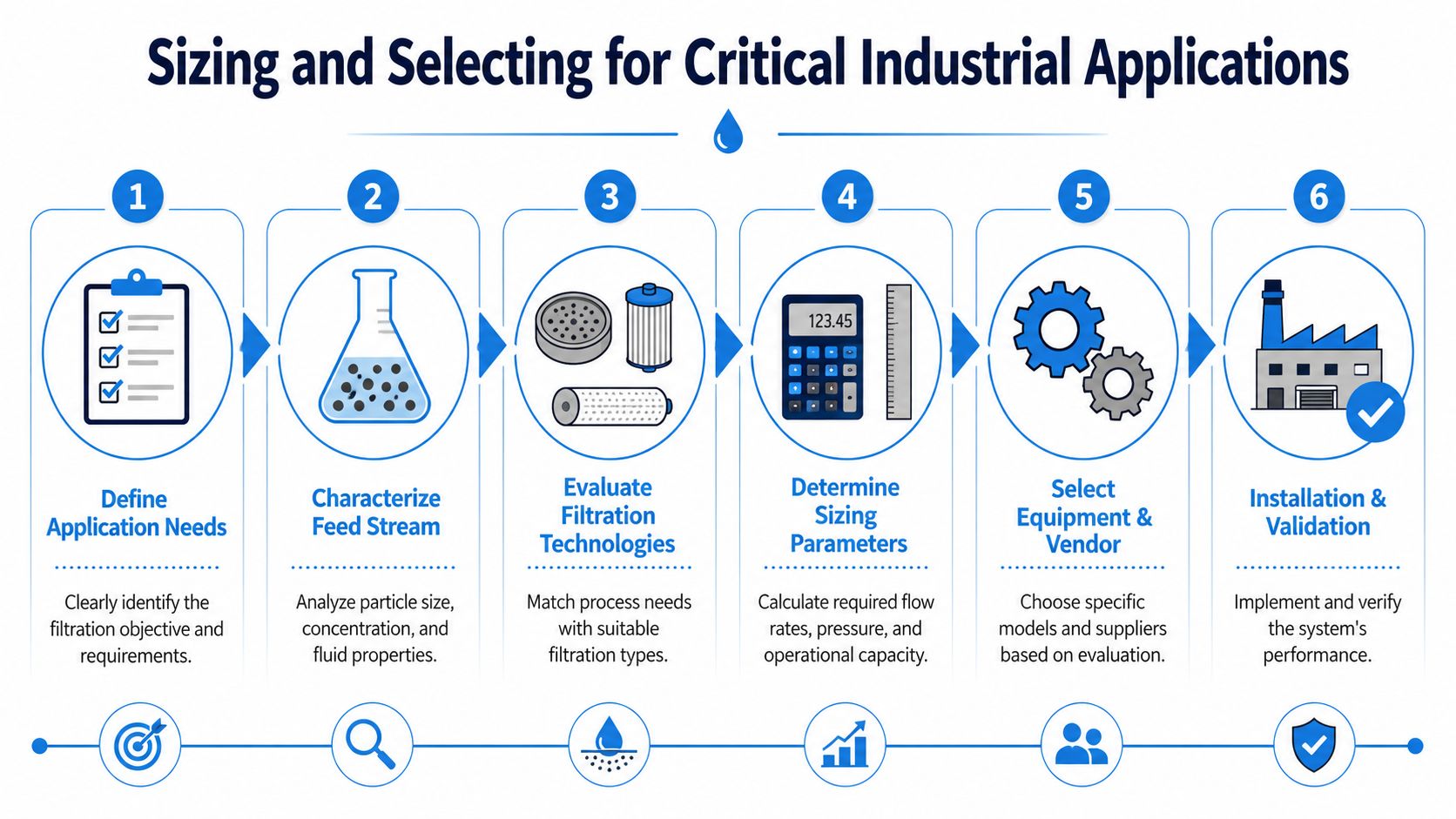
A filtration machine should be sized around what it protects. That changes the selection logic. The right question isn't “What micron rating do we usually buy?” It's “What happens to the next asset if this filter underperforms for a week?”
RO pretreatment that actually protects membranes
For RO pretreatment, suspended solids control isn't optional. It determines fouling rate, cleaning frequency, and membrane life. Engineers usually focus on membrane selection first, but pretreatment failure is what creates most of the pain later.
One hard limit does matter during sizing. For pretreatment of municipal water feed to industrial RO systems, the recommended maximum flow rate for a depth filter is 5 gallons per minute per 10-inch length, or 18.9 liters per minute. That limit is intended to prevent fluidization and preserve suspended solids removal efficiency. Ignore it, and a cartridge stage that looks acceptable on paper can become unreliable in operation.
If you're evaluating a full RO package rather than loose components, an industrial reverse osmosis system overview is useful for checking how pretreatment, membrane staging, and controls fit together.
RO pretreatment selection should follow this sequence:
- Characterize feed variability. Seasonal or source-driven swings matter more than a single sample.
- Match media to the solids profile. Don't force fine cartridges to act like bulk solids devices.
- Respect hydraulic limits. Overloading housings creates poor solids capture and fast plugging.
- Plan for maintenance access. Tight spaces and awkward vessel orientation turn routine changeouts into deferred maintenance.
EDI feed protection and fine solids control
EDI systems are less forgiving than many buyers expect. Even when upstream RO does the heavy ionic work, particulate breakthrough can still foul channels, upset performance, and create expensive replacement events. That's why post-RO polishing filtration and clean system design matter.
For EDI protection, the best filtration machine is usually boring. Stable, fine, predictable, and easy to monitor. You don't want heroic solids capture. You want consistent control with low shedding, compatible materials, and a housing arrangement that operators can service without contamination.
A few practical selection points matter more than brochure language:
- Use filtration to protect the stack, not to compensate for unstable upstream pretreatment.
- Choose low-shedding media and chemically compatible materials.
- Place gauges or transmitters where operators can trend differential pressure.
- Avoid oversizing so aggressively that flow distribution becomes poor at normal operating load.
If an EDI system keeps seeing solids, the root cause is usually upstream. Replacing the final cartridge more often may keep you running, but it doesn't fix the process.
Process water solids removal without overspending
General process water service is where overengineering shows up most often. Plants buy fine filtration because procurement wants one specification for everything. That rarely lowers total cost.
For wash water, cooling-related side streams, chemical feed makeup, or general utility polishing, start with consequence of failure. If downstream equipment can tolerate coarse residual solids, a screen or bag stage may be the right answer. If nozzles, seals, or heat transfer surfaces are sensitive, cartridge-based depth filtration often pays back in uptime and reduced cleaning labor.
The lowest total cost option usually has these traits:
- It removes the solids that cause the problem.
- It doesn't force excessive cartridge consumption.
- It can be isolated and serviced quickly.
- It fits the plant's maintenance behavior, not the ideal maintenance plan in a manual.
That last point matters. A technically correct filtration machine still fails commercially if your site won't maintain it the way the design assumes.
Key Performance Metrics for Filtration Systems
Most filtration problems don't begin with visible dirty water. They begin with performance drift that nobody acts on soon enough. Engineers need a short list of KPIs that show whether the filtration machine is protecting the plant or gradually turning into a restriction and contaminant bypass risk.
What to watch during normal operation
Differential pressure is the first number to trend. It tells you how hard the filter is working and whether solids are accumulating in the media or on the surface. Rising differential pressure usually means loading. A sudden drop after a period of loading can indicate media damage, seal bypass, or a process upset that changed solids loading.
Turbidity is the fast operational check for clarity performance. In practice, it's useful for spotting feed swings, confirming pretreatment stability, and checking whether a filter changeout restored performance. Turbidity alone doesn't define all particle risks, but it's an efficient early warning indicator.
Silt Density Index (SDI) matters most when membranes are downstream. Operators use it to judge whether suspended and colloidal foulants are under control before RO. If SDI trends the wrong way, don't just change cartridges and move on. Check upstream clarification, coagulant performance, media integrity, and hydraulic loading.
How engineers use performance data
Beta ratio (β) is valuable when you need to understand capture efficiency at a specific particle size. It's especially useful in applications where a nominal micron statement isn't enough and the consequences of breakthrough are real. For procurement teams, this means that “same micron rating” stops being a meaningful comparison across suppliers.
A practical monitoring routine usually includes:
- Trend differential pressure by stage so operators can see where loading is occurring.
- Compare influent and effluent turbidity when the process is sensitive to solids spikes.
- Track SDI ahead of RO, not just after a cleaning event.
- Review changeout intervals against actual process conditions rather than fixed calendar dates.
Clean appearance is not proof of protection. A filter can pass damaging fines while the water still looks acceptable to the eye.
Use these metrics together. One number almost never tells the full story.
Strategies for Maintenance and Fouling Mitigation
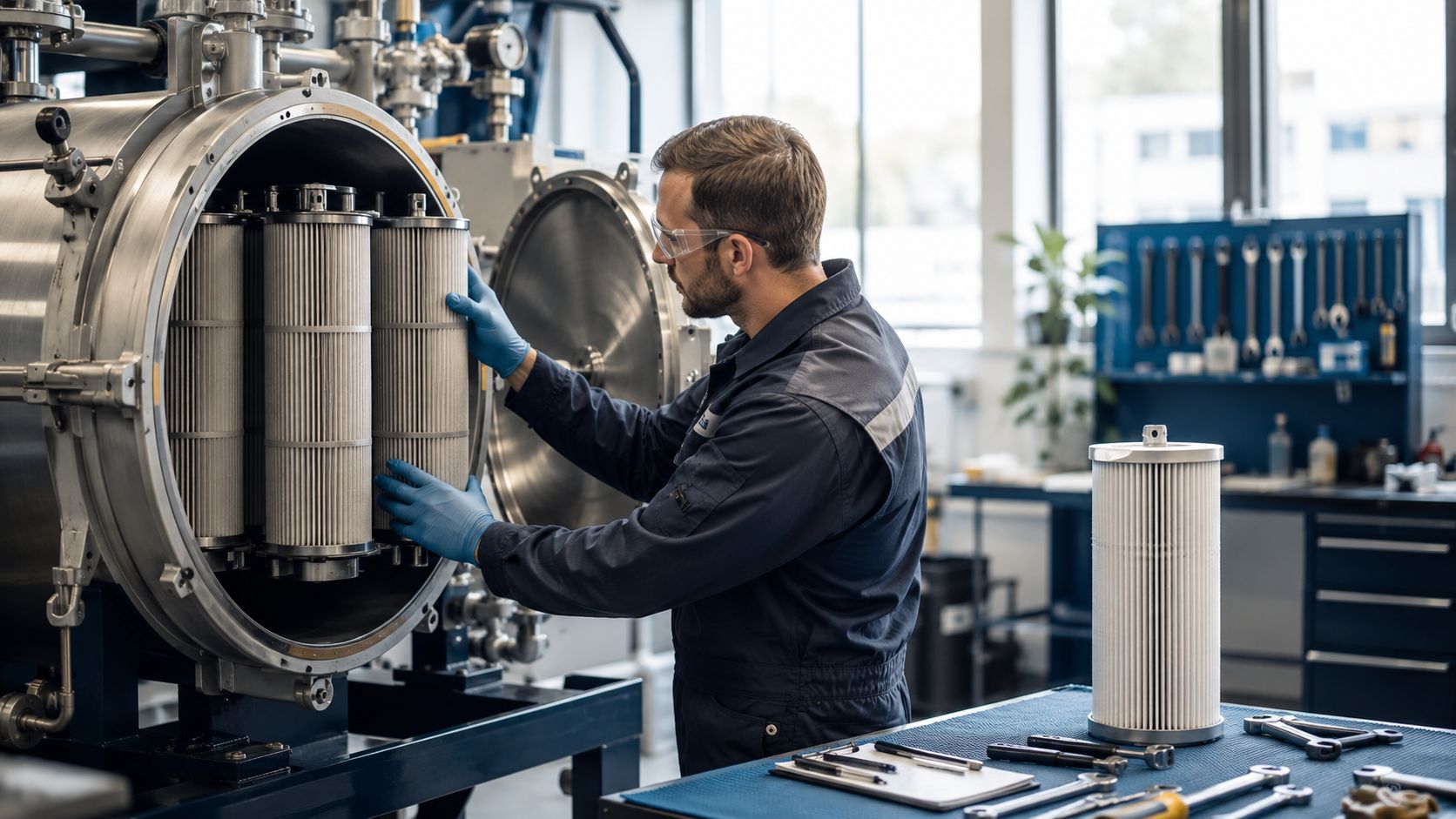
Reactive maintenance is expensive because fouling rarely stays isolated to the filter itself. Once solids, organics, or biofilm move past the intended barrier, the plant starts paying in pump wear, membrane cleaning, nozzle plugging, conductivity drift, and operator time.
The fouling modes that matter in real plants
Particulate fouling is the most familiar. It comes from suspended solids, corrosion debris, precipitated material, or inconsistent upstream clarification. This is where hydraulic discipline matters. Excess loading shortens filter life and can distort performance enough that downstream assets start seeing solids even though the filter stage is still technically in service.
Organic fouling is harder to diagnose because the filter may not blind off in a simple way. Organics can smear media surfaces, plug membrane pores, and make differential pressure trends look less dramatic than the actual loss in filtration efficiency.
Biological fouling creates persistent headaches in warm, nutrient-rich, or intermittently used systems. Once biological material gets established, simple changeouts often don't solve the problem. The housing, piping, and dead legs also need attention.
For difficult clarification duties such as cell culture processing, charge-modified depth filters use two removal mechanisms: physical capture in tortuous paths and electrostatic adsorption through a positively charged polymeric resin that binds impurities, HCP, DNA, and viruses while protecting downstream membrane filters. That's a good example of using media design to prevent fouling from becoming a broader system issue.
Maintenance practices that lower total cost
Good maintenance starts with design choices. A filtration machine that's hard to vent, awkward to drain, or inaccessible for changeout will be maintained late and inconsistently. That drives both fouling and labor cost.
The most effective practices are usually unglamorous:
- Keep flow within design limits so the media does the separation work it was selected to do.
- Use backwashing where the equipment is built for it. This suits many surface filtration applications better than repeated manual teardown.
- Use CIP on membrane systems when the chemistry and configuration support it. Waiting too long usually makes cleaning less effective.
- Select media for compatibility, not just retention rating. Chemical attack and fiber shedding create secondary problems.
- Replace seals and inspect internals during routine service. A sound filter element won't help if the housing bypasses.
Some specialized depth systems also have mechanical details that matter in maintenance planning. The depth filter reference on lenticular pods notes a stacked-disc design with compression seals requiring seven seals per eight-cell filter and available 300 mm or 400 mm disc diameters for high-purity separation duties. Those details affect spares planning, service time, and how carefully crews must reassemble the module.
Maintenance plans should target fouling causes, not just fouled components. If the same filter plugs the same way every cycle, the plant has a process problem, not a cartridge problem.
Procurement and Logistics for Your Filtration Project
A technically sound filtration machine can still become a bad project if procurement misses packaging, spares, lead time exposure, or vendor coordination. Most delays don't come from the filter element itself. They come from small commercial and logistical gaps that weren't locked down early.
What procurement should lock down before issuing a PO
The purchase package should define more than flow and micron rating. It needs service conditions, wetted materials, housing arrangement, connection standards, isolation requirements, instrumentation, and expected maintenance method. If those details stay vague, suppliers will quote equipment that technically complies but fits the plant poorly.
Procurement should also separate must-have requirements from nice-to-have preferences. That helps engineering evaluate alternates without losing protection for the essential process constraint. If the filter is guarding RO, EDI, or critical product contact water, don't let “or equal” language erase the performance intent.
A useful bid checklist includes:
- Service definition. Feed quality, upset conditions, and consequence of breakthrough.
- Mechanical scope. Housing, internals, valves, vents, drains, gauges, and skid expectations.
- Consumables plan. Initial fill, startup spares, and routine replacement parts.
- Acceptance criteria. What the supplier must demonstrate at startup or FAT level, if applicable.
Why packaging and vendor coordination matter
A skid-mounted, pre-piped system usually reduces field complexity. It can simplify installation sequencing, make support points and drains more predictable, and reduce the number of interfaces the site team has to resolve during startup. For many plants, that's worth more than shaving a small amount off line-item equipment cost.
Vendor structure matters too. Buying direct from a single OEM can work well when the scope is narrow. But mixed-brand projects often create administrative drag. When a system needs housings, pretreatment components, membranes, and polishing equipment from different manufacturers, coordinating submittals, delivery windows, and spare parts can become its own workload.
Good procurement reduces operational risk when it:
- Consolidates compatible equipment under a coherent scope
- Confirms spare parts availability before startup
- Aligns delivery timing with shutdown windows
- Requires documentation that operators can use
If the handoff package is weak, the site pays for it later in delayed commissioning and avoidable troubleshooting.
Conclusion Your Partner in Industrial Filtration
A filtration machine isn't just a line item in a water system. It's a protective barrier for the assets that cost far more to replace or clean. When the selection is right, the plant sees steadier operation, fewer downstream fouling events, and lower maintenance pressure on operators and reliability teams.
The buying decision should always come back to application fit. Match the filtration method to the solids challenge, the hydraulic reality, the maintenance culture at the site, and the consequence of breakthrough. That's how engineers avoid the common trap of comparing equipment by micron label alone.
For procurement teams, the best outcome usually comes from treating filtration as a system decision, not a commodity purchase. The housing, media, instrumentation, service access, spare parts plan, and vendor coordination all influence whether the equipment performs the way the quote promised.
That's why experienced support matters. The right partner helps narrow the options, challenge weak assumptions, and align the filtration machine with the actual business outcome you need, whether that's RO protection, EDI reliability, reduced consumable spend, or better uptime across a process water system.
If you're evaluating industrial filtration equipment, Purecowater can help you source and configure the right solution for solid-liquid separation, RO pretreatment, and high-purity water production. Their team supports engineering and procurement groups with filtration, RO, and EDI equipment selection, coordinated sourcing across major brands, and practical guidance to reduce downtime and total project friction.